
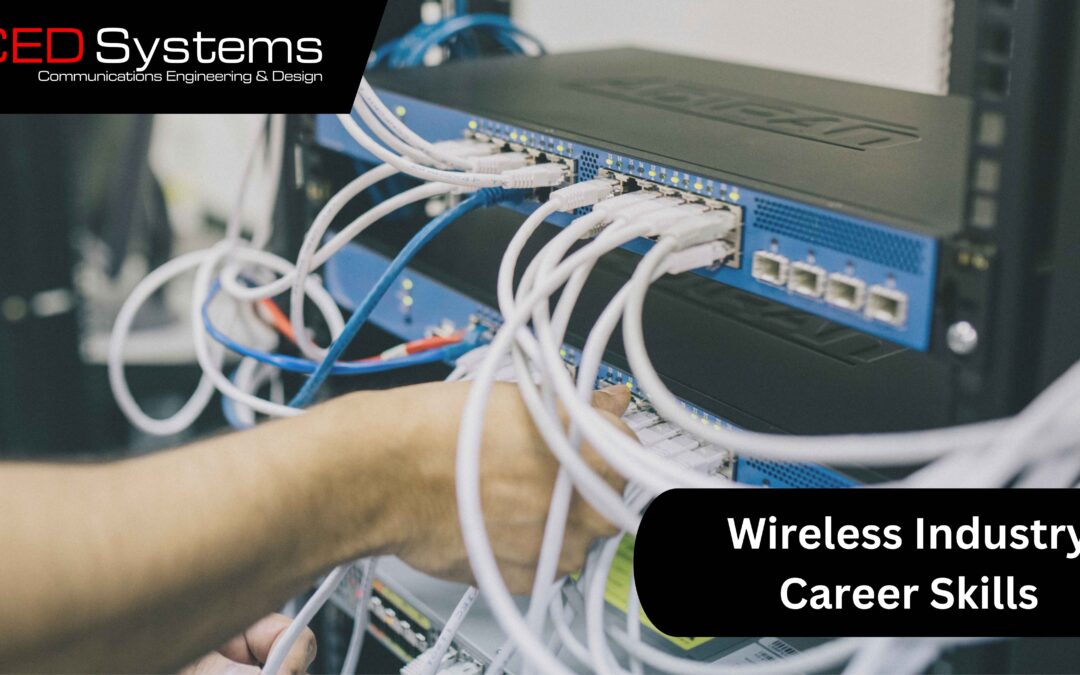
The in-building wireless industry is evolving faster than ever. In 2025, with the expansion of 5G, CBRS, IoT, and private networks, buildings are expected to provide the same level of mobile connectivity indoors as outdoors.
This rapid shift is driving demand for professionals with the right mix of technical expertise, real-world problem-solving, and future-readiness.
Whether you’re an RF engineer, a network technician, or just starting out in telecom, success in this field depends on mastering a distinct set of skills.
Let’s dive into what you need to thrive in this high-growth sector.
Why the In-Building Wireless Industry Is Booming in 2025
Smart buildings, digital tenants, and remote-hybrid work models have made uninterrupted mobile connectivity non-negotiable.
Combine that with:
- The roll-out of 5G networks, especially in urban and enterprise environments.
- Increased adoption of CBRS and private LTE/5G networks in warehouses, hospitals, and campuses.
- Tenants demanding better user experiences, especially in luxury residential and Class A commercial properties.
All of this has made indoor wireless performance a critical differentiator.
DAS (Distributed Antenna Systems), small cells, and Neutral Host Networks (NHNs) are at the heart of this transformation, and professionals who can design, install, and manage them are in demand.
Core Technical Skills That Are Now Non-Negotiable
In 2025, hiring managers and integrators aren’t just looking for theoretical knowledge. They want professionals with hands-on understanding of:
1. RF (Radio Frequency) Fundamentals
At its core, the industry is about signals. Understanding how radio waves propagate, what causes interference, and how to mitigate loss is essential.
You should be familiar with:
- Frequency ranges (especially 4G LTE, 5G NR, and CBRS).
- Signal strength, SINR, RSRP/RSRQ metrics.
- Multipath, attenuation, and shadowing effects.
2. DAS and Small Cell Design Principles
Whether you’re designing with iBwave or working with a system engineer, knowledge of how DAS works, including active vs. passive systems, is critical. \
This includes:
- Coverage vs. capacity design approaches.
- Proper antenna placement.
- Fiber and coaxial cable planning.
3. Test Equipment Proficiency
You’ll often be expected to:
- Use spectrum analyzers to measure interference.
- Perform walk tests with tools like TEMS or PCTEL.
- Identify PIM (Passive Intermodulation) using PIM testers.
- Run sweep tests on cabling infrastructure.
4. Fiber Optics and Structured Cabling
Modern DAS and NHN systems rely heavily on fiber optics. Understanding how to terminate, splice, test, and troubleshoot both fiber and coaxial lines is key.
5. Understanding Carrier Requirements and Network Protocols
Each carrier has its own design and performance standards.
Knowing how 4G LTE and 5G NR work across carriers and what’s needed for signal rebroadcast is now table stakes.
Helpful Resource: Everything To Know About a DAS or NHN Site Survey!
Certifications That Boost Your Credibility
You don’t need a four-year telecom degree to get into this field. Certifications are the fastest path to proving your skill set:
1. iBwave Design Certification
Industry gold standard for DAS/small cell design. Level 1 focuses on fundamentals, while Level 2 covers advanced design.
2. CBRS Certified Professional Installer (CPI)
If you’re working on private LTE/5G or shared spectrum, CPI certification is legally required for onboarding CBRS devices.
3. ETA DAS Installer Certification
Offered by the Electronics Technicians Association, this is a hands-on credential for professionals installing and maintaining DAS.
4. CompTIA Network+ or Cisco CCNA
These are great add-ons for professionals handling networking, IP backhaul, and integration into enterprise systems.
5. FCC General Radiotelephone Operator License (GROL)
Often required for federal, aviation, and carrier-backed deployments involving higher-powered transmitters.
Soft Skills That Set Top Techs Apart
While technical knowledge opens the door, it’s the soft skills that determine how far you go:
1. Communication
You need to be able to explain problems clearly to clients, report issues to engineers, and coordinate with property managers.
2. Problem Solving
Every building is unique. Signal bounce, interference, unexpected materials, real-time problem solving is the job.
3. Documentation and Reporting
Whether it’s submitting a closeout package or recording signal tests for carrier approval, clear documentation is vital.
4. Compliance and Safety Awareness
You’ll be working in commercial spaces, often with strict security and safety rules. OSHA awareness and proper PPE use are non-negotiable.
5. Adaptability
Technology is changing fast. Being willing to learn, adopt new tools, and adjust to new carrier requirements is a huge asset.
Career Tracks & Roles in the DAS/NHN Ecosystem
As the industry grows, so does the diversity of roles available:
1. RF Engineer
Responsible for system design, signal modeling, and optimization. Often works with iBwave and test equipment.
2. DAS Field Technician
Handles antenna and cable installations, walk tests, and troubleshooting. Typically works on-site.
3. Network Design Engineer
Focuses on backhaul, switching, and IP configurations that support DAS and NHN systems.
4. Project Manager
Coordinates project phases, budgets, permits, and stakeholder communication.
5. Integration Specialist
Works with carriers to ensure systems are approved, signals are clean, and handoffs are optimized.
Bonus: Emerging roles are appearing around private 5G, edge computing, and IoT systems integration, especially in healthcare and manufacturing.
How to Build & Grow These Skills in 2025
If you’re new to the field or looking to upskill, here’s how to get started:
1. Take Focused Online Courses
- iBwave training for design.
- Anritsu or Keysight labs for RF testing.
- CBRS CPI training via Google or Federated Wireless.
2. Get Field Experience
Work with system integrators, general contractors, or telecom firms as a technician apprentice. Nothing beats on-site learning.
3. Join Industry Events and Forums
Events like Connect(X) and IWCE offer real-world exposure. Also join LinkedIn groups for DAS professionals and RF engineers.
4. Follow Industry Blogs and Case Studies
Keep an eye on projects happening in commercial real estate, healthcare, education, and transportation to learn what’s working in the real world.
Conclusion: Get Future-Ready — One Skill at a Time
As buildings get smarter and wireless networks become more complex, skilled professionals in DAS and NHN are becoming the backbone of connectivity.
Whether you’re installing antennas or designing 5G-ready infrastructure, the demand for your skillset is only going up.
By investing in the right training, certifications, and practical experience, you’re setting yourself up for a high-growth, high-impact career.
At CED Systems, we don’t just build next-gen wireless infrastructure; we collaborate with and support the next generation of wireless professionals.
Ready to start or advance your journey in the in-building wireless industry?
Let’s connect. Reach out to CED Systems and learn how we can help you grow your career in 2025 and beyond.