
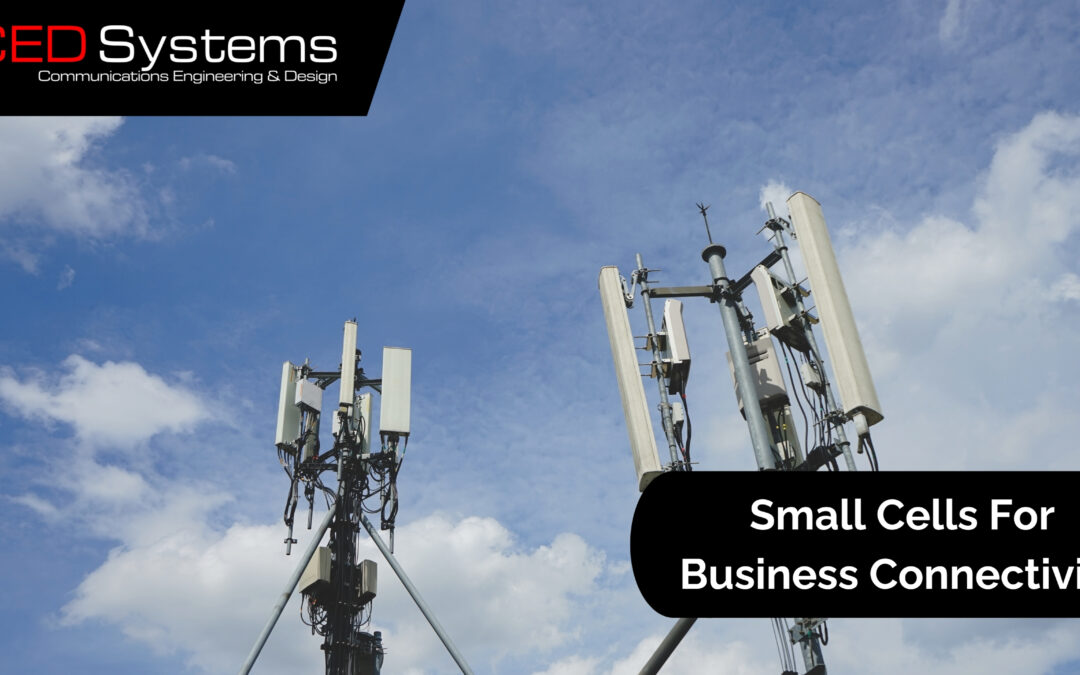
The way enterprises connect, collaborate, and innovate is rapidly changing.
Traditional networks often fall short in meeting the rising demands of a digital-first world filled with connected devices, hybrid work environments, and data-intensive applications. This is where 5G small cells step in, offering businesses a smarter, more localized way to achieve reliable and high-performance connectivity.
Unlike large towers, small cells bring 5G closer to users, whether in offices, warehouses, hospitals, or stadiums, ensuring that critical operations run seamlessly.
In this article, we’ll explore what small cells are, their key benefits, real-world applications, and why enterprises cannot afford to wait any longer to adopt them.
What are 5G Small Cells (in simple terms for businesses)?
When most people think of mobile connectivity, they picture large cell towers scattered across cities.
While these macro towers are essential, they have limitations, especially in dense urban areas and modern enterprise environments.
This is where 5G small cells come in. Small cells are compact, low-power base stations that provide localized coverage. Unlike macro towers, they are designed to fill in gaps, particularly indoors, in high-rise offices, warehouses, hospitals, and campuses where traditional signals struggle.
For enterprises, small cells are the missing piece that ensures true 5G performance is delivered consistently, not just outside but deep inside buildings where business operations actually happen.
They work by densifying the network, placing more cells closer to users, and thereby enhancing both coverage and capacity.
Key Benefits of 5G Small Cells for Enterprises
As businesses embrace digital transformation, connectivity has become the backbone of productivity and growth.
5G small cells offer enterprises the edge by ensuring stronger, smarter, and more reliable wireless networks.
1. Enhanced Coverage
One of the biggest challenges enterprises face is poor indoor coverage.
Thick walls, glass, concrete, and even modern energy-efficient windows can block or weaken traditional mobile signals.
The result? Dead zones in basements, meeting rooms, production floors, or large campuses.
Small cells directly address this issue by bringing 5G closer to users.
Deployed strategically within buildings or campuses, they deliver seamless, wall-to-wall coverage.
For industries like logistics or healthcare, this means that workers can stay connected no matter where they are, whether it’s in a warehouse aisle, a hospital wing, or a basement data center.
2. Higher Capacity & Seamless Connectivity
In the enterprise world, it’s not just about coverage; it’s about capacity. The modern workplace is flooded with connected devices: laptops, smartphones, IoT sensors, smart cameras, AR/VR headsets, and even automated robots.
A single macro tower may struggle to handle thousands of simultaneous connections in one confined area.
5G small cells solve this problem by offloading traffic and distributing the load more efficiently. Enterprises benefit from greater bandwidth and reduced network congestion, ensuring that employees, devices, and critical applications can all run simultaneously without slowdown.
This is particularly valuable in stadiums, corporate campuses, airports, or large offices where device density is extremely high.
Small cells essentially create a dedicated high-performance lane for enterprise traffic.
3. Ultra-Low Latency
Latency, the delay between sending and receiving information, may not matter much when scrolling social media, but it’s critical for enterprises. Applications like real-time video conferencing, AR/VR training, telemedicine, and factory automation require responses in milliseconds.
5G small cells are designed to support ultra-low latency communications, enabling enterprises to unlock new capabilities.
Imagine surgeons using AR tools during live procedures, warehouse robots reacting instantly to commands, or retail stores delivering seamless AR shopping experiences.
None of this would be reliable on traditional Wi-Fi or overloaded macro towers, but small cells make it possible.
4. Improved Reliability
Connectivity disruptions cost money.
Whether it’s a dropped call during a client negotiation or a failed IoT sensor reading on a production line, the impact on business continuity can be serious. Small cells provide localized redundancy and ensure strong, reliable signals even in challenging environments.
By reducing dropped connections and ensuring stable bandwidth, enterprises can count on their wireless infrastructure to support mission-critical operations without interruptions.
For sectors like finance, manufacturing, and healthcare, where downtime is unacceptable, small cells offer the kind of reliability that Wi-Fi or inconsistent carrier signals often cannot match.
5. Cost Efficiency
At first glance, deploying small cells might seem like a significant investment. However, enterprises that depend on high data usage quickly realize the long-term return on investment.
- Reduced energy use: Small cells are energy-efficient compared to traditional macro infrastructure.
- Optimized deployments: Instead of building expensive new towers, enterprises can simply deploy small cells where needed.
- Lower downtime costs: Reliable connectivity translates directly into higher productivity and fewer revenue losses.
For data-intensive enterprises, think tech companies, logistics providers, or smart factories, the efficiency and productivity gains from small cells often outweigh the initial costs.
6. Security & Control
Another critical benefit for enterprises is the ability to secure and manage their own private 5G networks using small cells. Unlike public carrier networks, private networks give organizations more control over who connects, how data is handled, and what security protocols are in place.
This is especially important for industries dealing with sensitive data such as healthcare, defense, finance, and government.
With small cells, enterprises can ensure compliance with regulatory requirements while maintaining operational flexibility.
Additionally, private 5G with small cells allows companies to customize the network to their exact needs, prioritizing mission-critical applications, segmenting traffic, and implementing advanced security policies.
Taken together, these benefits make 5G small cells far more than just a connectivity upgrade; they’re a business enabler.
To see their true impact, let’s explore how enterprises are already applying them in real-world environments.
Also read: Passive vs Active vs Hybrid DAS: Choosing the Right System for 2025
Real-World Enterprise Use Cases
The advantages of 5G small cells become clearer when we look at real-world applications:
- Corporate Offices: Eliminate dead zones and provide seamless coverage for meetings, video calls, and hybrid work setups.
- Manufacturing & Warehousing: Power IoT sensors, smart robotics, and automation systems with reliable, low-latency connectivity.
- Healthcare: Enable real-time patient monitoring, telemedicine, and AR-assisted surgeries without fear of network drops.
- Retail & Hospitality: Deliver immersive customer experiences such as AR shopping assistants, mobile checkout, and tailored in-store services.
- Airports & Stadiums: Support thousands of simultaneous connections without congestion, improving both staff operations and customer satisfaction.
These examples show how 5G small cells are already transforming operations across industries. The question for enterprises now is not if they should adopt, but how soon.
Why Now? (The Urgency for Enterprises)
The demand for wireless data is exploding.
Employees are working across hybrid environments, customers expect instant digital experiences, and machines are increasingly communicating with each other in real time.
For enterprises, waiting to adopt small cells means falling behind competitors who are already leveraging 5G to optimize operations and enhance customer engagement.
Early adopters are seeing faster decision-making, smoother workflows, and new revenue streams powered by reliable 5G connectivity.
In short, the shift isn’t just about keeping up with technology; it’s about staying relevant in a rapidly evolving digital economy.
Conclusive Thoughts!
5G small cells are more than just a network upgrade; they are a strategic investment in the future of enterprise connectivity. They deliver enhanced coverage, greater capacity, ultra-low latency, reliability, cost savings, and unmatched security.
For enterprises that depend on connectivity to operate and innovate, small cells are the foundation of tomorrow’s competitive advantage. If your organization is looking to eliminate connectivity challenges and unlock the full potential of 5G, now is the time to act.
Reach out to our team to explore 5G small cell solutions tailored for your business needs.
Interested in building a career in the wireless industry? Read: Top Skills You Need to Succeed in the In-Building Wireless Industry (2025 Edition)